
Audit Overview
Your store's untapped revenue potential — and how to unlock it
Why We Created This Audit
We analyzed avpayurveda.com the same way we've audited 350+ e-commerce stores — looking for the specific gaps between your current experience and what top-performing Health & Wellness stores deliver. Every finding in this report is a revenue opportunity backed by industry data and competitive benchmarks.
What We Analyzed
- UX & Conversion Design10 findings
- Technology & App StackPlatform + 5 apps
- Industry BenchmarksHealth & Wellness
Pages Analyzed
- Homepage2 findings
- Collection Pages3 findings
- Product Pages (PDP)3 findings
- Cart & Checkout2 findings
 This audit was prepared by Growisto — a CRO-led Website development team behind 167% conversion growth for Atomberg, 46% CR lift for TyresNmore, and 350+ e-commerce projects.
UX & Conversion Findings
Page-by-page analysis with visual comparisons against top Health & Wellness stores
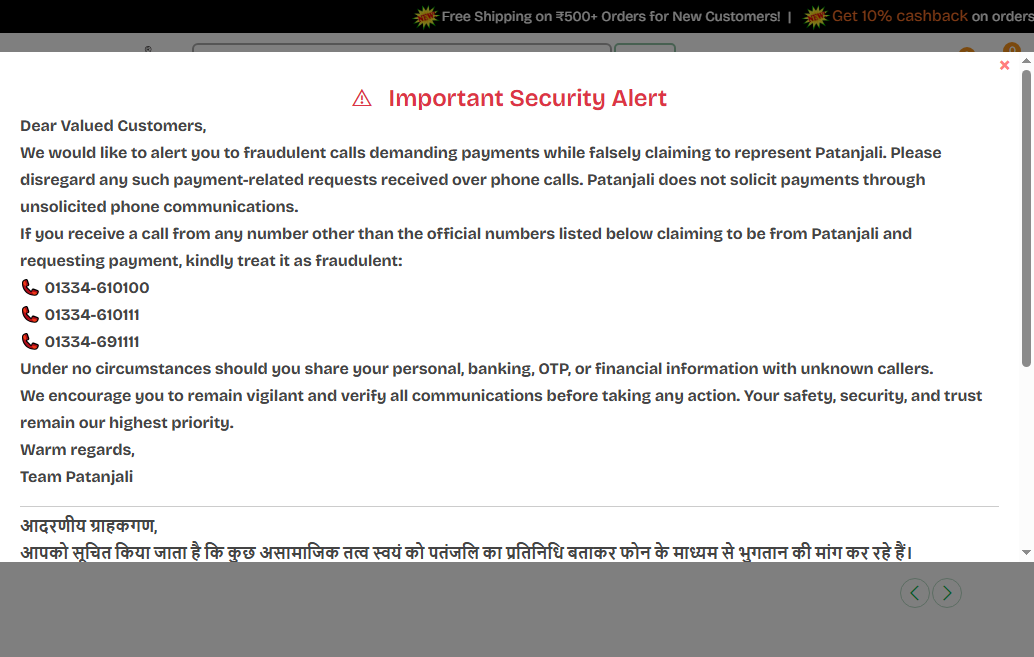
- AVP Ayurveda's homepage has no first-visit popup, exit-intent overlay, or scroll-triggered email capture modal. The only lead-capture mechanism is a passive in-page newsletter subscription section embedded below the fold — a format that converts 0.3–0.8% of visitors vs. 3–7% for a proactive first-visit popup.
- 7 of 10 Health & Wellness benchmark stores use a first-visit email popup. Zandu Care prompts visitors with a discount offer ('Get 10% off your first order') within the first 5–10 seconds of landing. Baidyanath and Patanjali both use email capture to grow their re-engagement lists. A first-visit popup is now the standard for India D2C health brands.
- AVP Ayurveda's 'Buy 1 Get 1 Free' limited-period offer displayed in the announcement bar is a strong purchase incentive — but it is not connected to an email capture mechanism. Shoppers who leave without purchasing also leave without entering AVP's email funnel, losing the brand the ability to re-engage them via Klaviyo or WhatsApp flows that typically drive 15–20% of D2C revenue.
- AVP Ayurveda's 120-year heritage and classical Ayurvedic positioning are compelling hooks for a first-visit popup that positions the offer beyond a simple discount: 'Get personalised Ayurvedic wellness guidance + 10% off your first order' would capture both transactional and wellness-curious visitors into the email funnel.
- Launch a first-visit email popup triggered after 6 seconds on desktop and 10 seconds on mobile (or on exit-intent for desktop). Lead with both an incentive and a wellness hook: 'Start your Ayurvedic wellness journey — get 10% off your first order + a free wellness guide.' A single-field popup (email only) optimises submission rates.
- A/B test two popup variants: Version A = percentage discount ('10% off your first order'), Version B = value-add ('Free Personalised Ayurvedic Consultation + 10% off'). The consultation offer aligns with AVP's hospital and vaidya network heritage and may convert higher for wellness-motivated buyers than a generic discount.
- Integrate the popup with a Klaviyo welcome series (3–5 emails) that introduces AVP's 120-year heritage, explains classical vs. new-age formulation differences, and progressively presents the product catalogue. This converts one-time popup submissions into educated, high-intent buyers rather than one-shot discount chasers.
- AVP Ayurveda's homepage features six trust indicators in a 'Why AVP Ayurveda?' section — 120 Years of Legacy, GMP Facility, No Known Side Effects, Pure Ayurvedic Ingredients, Trusted Since Generations, and Authentic Formulations — but does not include any customer testimonials, patient outcome stories, video reviews, or clinical study references.
- 8 of 10 Health & Wellness benchmark stores feature customer testimonials or clinical efficacy proof on their homepage. Baidyanath displays product-specific testimonials with star ratings and customer names; Zandu Care features video testimonials and written reviews. For classical Ayurvedic brands, social proof from real users is particularly persuasive because the target audience is often evaluating Ayurveda for chronic conditions where clinical outcome matters.
- AVP Ayurveda operates hospitals and treatment centres — a significant differentiated asset that implies thousands of treated patients. Yet no patient outcomes, doctor endorsements, or treatment success stories appear on the site's homepage. A '50,000+ patients treated at AVP hospitals' statistic with 3–4 real testimonials would convert the brand's institutional credibility into individual purchase proof.
- The absence of testimonials is more impactful for AVP than for a general wellness brand because classical Ayurvedic formulations (Kashayam, Arishtam, classical oils) are unfamiliar to many online shoppers. A testimonial from a patient describing results with a specific condition ('My knee pain reduced significantly after 3 months of Arthrojith Capsules') bridges the trust gap between an unfamiliar product and a purchase decision.
- Add a dedicated 'What Our Customers Say' section to the homepage featuring 4–6 testimonials tied to specific health concerns: joint care, digestive health, immunity, women's wellness. Include the condition treated, product used, and duration — e.g., 'After 8 weeks of Indukantham Kashayam, my digestion improved noticeably.' Format as cards with star ratings and customer name/location.
- Feature at least one video testimonial from an AVP hospital patient or long-term user. Video testimonials convert 2–3× more than written text because they carry implicit authenticity signals (facial expression, voice, specificity). Even a single high-quality video testimonial above the fold would materially improve the homepage trust signal.
- Add a 'Our Numbers' impact section: '120+ Years of Practice | 10,000+ Outlets | 50,000+ Treated at AVP Hospitals | 394 Classical Formulations.' These institutional numbers — unique to AVP's hospital network — are competitive differentiators that neither Baidyanath nor Patanjali can match at the same depth, and they convert credibility into purchase confidence.

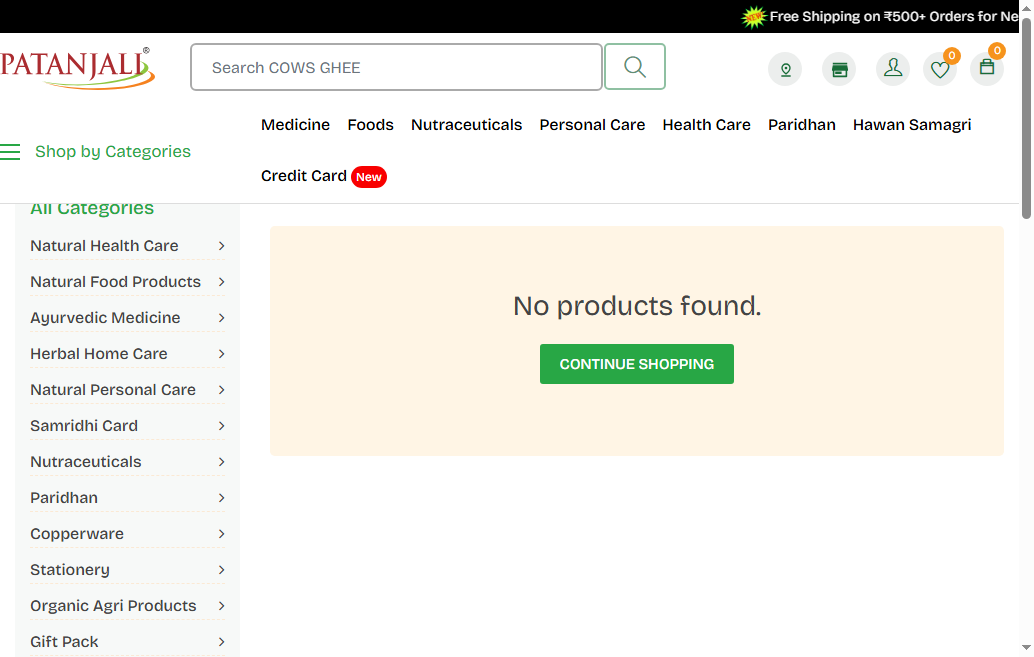
- AVP Ayurveda's collection page product cards display image, name, and price — but no wishlist heart icon, bookmark, or save-for-later button is visible. Ayurvedic shoppers, particularly those browsing for chronic condition support (joint care, diabetes, digestive health), typically compare 3–5+ products across multiple sessions before committing to a classical formulation they haven't used before.
- 5 of 10 Health & Wellness benchmark stores offer wishlist functionality on collection cards. Himalaya and Zandu Care show a persistent heart icon on product cards that allows logged-in or guest users to save products for later review. A wishlist increases return visit rate by 15–20% by giving shoppers a reason to come back and complete the purchase they started.
- AVP Ayurveda's 394-SKU catalogue spanning 20+ health concern categories creates exactly the browsing pattern where wishlist adds the most value: a shopper with knee pain browsing Bone & Joint Care may shortlist Arthrojith Capsules, Lakshadi Thailam, and a Treatment Package before deciding which to purchase first. Without a save mechanic, that shortlist lives only in browser history or memory.
- The absence of user accounts on AVP's storefront further compounds the issue — wishlist typically pairs with a logged-in account that enables re-engagement. Adding wishlist alongside a lightweight account creation prompt would build AVP's CRM database of high-intent shoppers for subsequent email or WhatsApp re-engagement flows.
- Add a wishlist heart icon on every collection card (top-right overlay) and on every PDP beside the Add-to-Cart button. For non-logged-in users, prompt account creation to save items — framing this as 'Save your Ayurvedic wellness list' creates an account registration hook tied to a specific user action rather than a generic sign-up.
- Surface the wishlist count in the header navigation bar for logged-in users, and create a 'My Wellness List' page within the user account area. Display wishlist items with a 'Complete your order' CTA and a one-click 'Add all to cart' option for returning visitors ready to purchase.
- Integrate wishlist with re-engagement flows: a WhatsApp or email message 48–72 hours after a user saves items without purchasing — 'Your saved products are waiting for you' with a direct link to the wishlist. WhatsApp Business is already in use in India's Ayurvedic D2C space and has 70–80% open rates vs. 25–35% for email.
- AVP Ayurveda's collection pages offer product type filters (Arishtam, Capsules, Kashayam, Thailam) and stock availability filters — but no on-page health concern filter that lets a shopper narrow 394 products to their specific condition (e.g., Digestive Health, Joint Care, Immunity). The concern-based filtering exists only in the top navigation menu, not as a sidebar or pill filter on the collection page itself.
- 8 of 10 Health & Wellness benchmark stores offer concern-based on-page collection filters. Baidyanath's collection sidebar includes 'Shop By Concern' filter options that reduce the displayed products to the relevant concern — a shopper looking for Digestive Care sees only those products, not all 250+ general items. This is now the expected standard for large-SKU Ayurvedic catalogues.
- AVP Ayurveda's 394-SKU catalogue across 20+ health concerns is precisely the size where on-page filtering becomes critical. A first-time visitor browsing for Joint Care formulations cannot quickly identify the relevant products without clicking into the navigation hierarchy or manually scrolling. Each additional click between intent and relevant product page increases bounce rate by 10–15%.
- The 'Add to Compare' feature on AVP's collection cards is a positive UX element — but comparison only works effectively when the shopper has already filtered to a relevant concern subset. Comparing a Kashayam for digestive health against an oil for skin care is meaningless; filterable concern filters make the compare feature more useful by ensuring the shopper is comparing like-for-like products.
- Add a filterable 'Health Concern' filter panel to all collection sidebar/filter bars, pulling from the same 20+ concern taxonomy already used in AVP's navigation (Bone & Joint, Digestive Health, Immunity, Skin Care, Women's Wellness, etc.). This requires tagging products in Shopify with concern tags and enabling them in the collection filter settings — a 1–2 day implementation.
- Add a 'Formulation Type' filter alongside the existing category filter — allowing shoppers to narrow by Tablets/Capsules, Kashayam, Arishtam, Thailam (Oil), and Equipment. Classical Ayurvedic shoppers often have a preference for a delivery format (e.g., tablets over liquid Kashayam) and this filter removes friction for them.
- Install SearchPie or Boost Commerce (Shopify-native faceted filter apps) to add multi-select concern + formulation type filtering with instant product count updates. Both apps integrate with Shopify's existing product tag structure, meaning no product data migration is required — configuration time is 2–4 hours.

- AVP Ayurveda's product cards display image, product name, and price — no badges indicating bestseller status, review count, discount percentage, or health concern category label. A first-time visitor browsing 394 products has no quick signal to identify which Kashayam or capsule is most trusted for their specific condition.
- 7 of 10 Health & Wellness benchmark stores display at least one social proof badge on product cards. Baidyanath shows discount percentages prominently; Zandu Care marks bestsellers with visual indicators and shows star ratings on cards. These badges reduce decision friction by giving shoppers an immediate shortcut to validated choices.
- Classical Ayurvedic formulations are particularly challenging for first-time online shoppers who may be unfamiliar with product names like 'Indukantham Kashayam' or 'Dhanwantharam Thailam 101.' A '#1 for Digestive Health' badge or 'Best Seller in Joint Care' label instantly communicates the product's validated application without requiring the shopper to read a product description.
- AVP's 'Buy 1 Get 1 Free' promotion is applied broadly — but there is no visual badge on individual product cards to indicate which products qualify, creating a disconnect between the announcement bar promotion and the browsing experience.
- Add a 'Best Seller' badge to AVP's top 10–15 products by sales volume, and a 'Most Popular for [Concern]' badge to the top-selling product in each of the major health concern categories (Bone & Joint, Digestive Health, Immunity, Women's Wellness, etc.). These badges can be implemented as Shopify product tags rendered as overlays on collection cards.
- Display the BOGO promotion badge ('1 Get 1 Free') on qualifying product cards in the collection, rather than only in the announcement bar. This connects the promotional offer directly to the product browsing moment and drives higher ATC rates on BOGO-eligible items.
- For products with significant review counts (once a reviews app is implemented), display a review count chip on the collection card — e.g., '★ 4.6 (128 reviews)'. In Ayurvedic health categories, a high review count is a stronger purchase signal than a discount badge because it implies the product has been used successfully for the stated health concern.

- AVP Ayurveda's product pages display no customer star ratings, review counts, or written testimonials on any product — not on Aswajith Capsules, not on Arthrojith Capsules, not on any SKU in the catalogue. The purchase decision relies entirely on product descriptions, ingredient information, and a GMP certification badge.
- 9 of 10 Health & Wellness benchmark stores display customer reviews on their PDPs. Zandu Care shows 92 reviews with a 5-star breakdown (82% 5-star, 13% 4-star) on product pages; Baidyanath displays star ratings and review counts; Patanjali features user testimonials. Customer reviews are the single most impactful conversion factor for health products — Nielsen reports 92% of consumers trust peer recommendations over brand claims.
- Classical Ayurvedic formulations present a specific challenge for first-time online buyers: the product names (Indukantham Kashayam, Dhanwantharam Thailam, Saptasaram Kashayam) are unfamiliar, the formulation basis (classical Ayurvedic texts) is not well understood by all shoppers, and the treatment timescales (weeks to months) require commitment. A review from a patient saying 'I've used this Kashayam for 6 weeks for my acid reflux and the results have been remarkable' directly addresses all three hesitations.
- AVP Ayurveda's absence of reviews is particularly impactful given the brand operates 10,000+ outlets across India and has 120 years of clinical practice — a patient base from which thousands of real testimonials could be sourced. The zero-review state implies the review infrastructure has simply not been built, not that users have had poor experiences. This is a fixable gap with high impact.
- Install Judge.me or Yotpo (both Shopify-native review apps) and immediately launch a post-purchase email sequence requesting reviews from existing customers. AVP's existing customer base from 10,000+ outlets and online orders represents an immediately accessible review pool. Target a minimum of 15–20 reviews per SKU for top-selling products within the first 60 days post-launch.
- Set up automated post-purchase review request emails at Day 14 and Day 30 post-delivery (reflecting the typical 2–4 week initial use period for classical Ayurvedic formulations). The email should reference the specific product and condition: 'How has [Product Name] supported your [health concern] in the past 2 weeks?' This increases review specificity and review-to-conversion impact.
- Display review highlights prominently at the top of the PDP — an average star rating, review count, and 2–3 featured review excerpts with the health concern addressed (e.g., 'Great for joint pain — J. Sharma, Chennai'). This places the strongest social proof element at the first-impression point of the PDP rather than below the fold in a full review section.
- AVP Ayurveda's PDPs display the product price without any BNPL or EMI messaging. For individual products priced ₹200–₹1,450, this is less critical — but AVP's Treatment Packages range from ₹2,375 (Panchakarma Starter Kit) to ₹42,120 (premium treatment packages), a price tier where installment payment options directly affect purchase decisions.
- 5 of 10 Health & Wellness benchmark stores offer BNPL or EMI options on PDPs. India BNPL adoption in the health and wellness category is accelerating — Simpl, LazyPay, and Snapmint all have active user bases in this category. For a ₹5,000 treatment package, showing 'Pay ₹1,667/month × 3 with Simpl' materially changes the perceived affordability of a holistic Ayurvedic treatment course.
- Ayurvedic treatment packages have a specific purchase psychology: the buyer is typically committed to a 2–3 month course of treatment, which means the total cost is a considered expenditure rather than an impulse buy. BNPL aligns perfectly with this purchase intent — breaking a ₹5,000 commitment into monthly instalments mirrors the treatment's own timeline and reduces upfront financial risk.
- AVP Ayurveda's individual classical formulations (Kashayam, Arishtam, capsules in the ₹200–₹1,450 range) also benefit from BNPL for first-time buyers unfamiliar with the brand who want to try a product without the perceived risk of the full cost. A 'No Cost EMI from ₹X/month' label below the price reduces the perceived commitment for a new buyer.
- Install Simpl or Snapmint (both Shopify-native) to display 'Pay in 3 parts with Simpl — ₹X/month' beneath the product price for all orders above ₹1,000. Show the per-installment amount prominently — the ₹/month framing is more persuasive than the total price for first-time classical Ayurvedic purchases where the buyer is committing to a treatment course.
- For Treatment Packages (₹2,375–₹42,120), add a dedicated 'Payment Options' section to the PDP with both full-payment and EMI options displayed side-by-side. Customers buying premium Ayurvedic packages are making a health investment decision — showing the full payment breakdown alongside EMI removes the price objection as the last barrier before checkout.
- Prioritise BNPL messaging on the Treatment Packages collection page and individual package PDPs. A banner reading 'Start your Ayurvedic treatment from ₹X/month' in the collection header normalises the installment payment model for high-value purchases and increases the total addressable buyer pool beyond those who can pay full price upfront.
- AVP Ayurveda's PDPs end at the FAQ section with no related products, 'Frequently Bought Together', or 'Complete Your Treatment Protocol' cross-sell section. For a classical Ayurvedic brand, this is a significant missed opportunity — Ayurvedic treatment protocols typically combine internal formulations (Kashayam, Arishtam, tablets) with external applications (Thailam, Kuzhambu) for the same health concern.
- 8 of 10 Health & Wellness benchmark stores display related or recommended products on PDPs. Zandu Care features a 'Handpicked Suggestions' carousel with 4–6 related products; Baidyanath shows 'You May Also Like' recommendations; Patanjali promotes complementary formulations. Cross-sell sections on PDPs increase AOV by 10–30% in health and wellness categories.
- AVP Ayurveda's 394-SKU catalogue contains natural cross-sell pairs: a shopper viewing Arthrojith Capsules (joint care) would logically be interested in Lakshadi Thailam or Dhanwantharam Oil (external joint treatment); a shopper viewing Indukantham Kashayam (digestive) would benefit from a complementary digestive capsule or post-meal formulation. These classical protocol combinations are AVP's expertise — surfacing them on PDPs converts clinical knowledge into revenue.
- AVP's Treatment Packages already bundle multiple formulations for specific conditions — but these packages are in a separate collection. Showing a 'Complete the Treatment' suggestion on individual product PDPs that links to the relevant Treatment Package is a cross-sell path that upgrades a single-product purchase to a full package.
- Add a 'Complete Your Ayurvedic Protocol' cross-sell section to each PDP, showing 2–3 complementary products for the same health concern. Source these from AVP's existing classical treatment combinations — for Bone & Joint products, recommend the matching oil and the Treatment Package; for Digestive products, recommend the complementary Kashayam and digestive capsule pair.
- Add a 'Frequently Bought Together' section with a single 'Add Both to Cart' button for the top 2-product combination per SKU. This mechanic converts single-item PDPs into 2-item carts without requiring the shopper to navigate away. At AVP's typical ₹900–₹1,450 price point, adding a second product pushes orders above the ₹1,299 free shipping threshold — a natural purchase incentive.
- For products where a Treatment Package addresses the same condition, add a 'Try the Complete Protocol' callout below the product description linking to the corresponding Treatment Package. Frame it as clinical completeness: 'For comprehensive Joint Care treatment, see AVP's Complete Joint Care Protocol (includes Arthrojith Capsules + Lakshadi Thailam + Sahacharadi Oil).' This positions AVP's expertise as the cross-sell driver, not just generic product recommendations.

- AVP Ayurveda's cart page displays 'Free shipping on orders above ₹1299' as a static text line — but there is no visual progress bar showing the shopper's current cart value vs. the ₹1,299 threshold. A shopper with ₹900 in their cart sees the threshold text but has no visual cue of how close they are to unlocking free shipping and no motivating push to add one more product.
- 6 of 10 Health & Wellness benchmark stores display a free shipping progress bar in the cart. Zandu Care shows 'Add ₹X more to get free shipping' with a visual fill bar that updates in real-time as cart items change. This is a proven AOV-lift mechanic: visible progress toward a reward increases the likelihood of adding another product by 15–25% compared to a static text threshold.
- AVP Ayurveda's current cart already shows cross-sell recommendations (Shirodhara vessels, Steam boxes) — but these are positioned as generic 'You might also like' suggestions disconnected from the free shipping incentive. Combining the cross-sell with a progress bar ('Add one more item to unlock free shipping — here are relevant products priced ₹399–₹750') creates a compounding add-to-cart driver.
- AVP's average order value without the free shipping threshold is likely in the ₹700–₹1,000 range (single classical formulation). The ₹1,299 threshold represents a 30–85% additional spend — a non-trivial gap. A visual progress bar that shows a shopper they are ₹350 away from free shipping, combined with a relevant product recommendation at ₹399, converts this gap into an easily actionable nudge.
- Add a dynamic free shipping progress bar at the top of the cart page (or cart drawer if implemented): 'You're ₹X away from free shipping 🚚' with a visual fill bar. The bar should update in real-time as items are added or removed. This is available via a free/low-cost Shopify app (CartBot or similar) and takes 1–2 hours to configure.
- Below the progress bar, display 2–3 product recommendations from AVP's collection that would close the gap to the ₹1,299 threshold — specifically products priced in the ₹350–₹600 range. Curate these to match the health concern of the product already in cart: if the shopper has a Joint Care product, recommend a complementary Joint Care Oil or tablet.
- When the cart total crosses ₹1,299, replace the progress bar with a green success state: 'Free shipping unlocked! ✓' This turns the threshold achievement into a positive feedback moment that reinforces the order completion decision and reduces cart abandonment at the threshold point.

- AVP Ayurveda redirects the shopper to a full cart page when the 'Add to Cart' button is clicked, removing them from the product browsing experience. This requires an additional back-navigation step to continue browsing, adding friction for multi-product purchase sessions.
- 8 of 10 Health & Wellness benchmark stores use a cart drawer (slide-out sidebar) rather than a full page cart. Zandu Care, Baidyanath, and Patanjali all implement cart drawer patterns that allow shoppers to review their cart without leaving the product page. Cart drawers reduce the checkout path length by one navigation step and are particularly effective for the multi-product browsing sessions typical in Ayurvedic wellness shopping.
- AVP Ayurveda's Ayurvedic shopping behaviour lends itself to a cart drawer: a shopper managing a multi-condition wellness protocol (e.g., Joint Care + Digestive Health + Immunity) needs to browse and add 3–5 products in a single session. A full page cart breaks this browsing flow by redirecting them away from the product catalogue on each add.
- Implementing a cart drawer also enables the free shipping progress bar recommendation (cart_f1) to be surfaced in the slide-out panel, making the threshold visible at every add-to-cart moment rather than only when the shopper navigates to the full cart page.
- Implement a cart drawer (slide-out sidebar) to replace the full page cart redirect on Add-to-Cart action. The drawer should appear from the right side of the screen, showing cart items, subtotal, the free shipping progress bar (cart_f1), and a prominent 'Checkout' CTA — keeping the shopper in the browsing context while confirming the cart state.
- Add a 'Continue Shopping' link at the bottom of the cart drawer to allow shoppers to collapse the panel and return to browsing without a navigation step. This is particularly important for AVP's multi-condition shoppers who are building a complete wellness protocol across multiple health concern categories.
- Include the cart cross-sell recommendations (currently on the full cart page) within the drawer as a collapsible 'You May Also Like' section below the cart items. Position it below the checkout CTA so it doesn't delay the checkout action but is visible for shoppers who want to add one more product before proceeding.
App Ecosystem
What's installed vs what's missing from best-in-class Health & Wellness stores
Present (5)
Missing (6)
App Stack Assessment
AVP Ayurveda's app stack reflects a brand that has invested in product infrastructure and trust signals — GMP-certified manufacturing, 20+ concern categories in navigation, COD trust badges, and cart cross-sells are all present. The critical gap is in the conversion layer: the complete absence of a customer reviews app is the most impactful missing piece, as classical Ayurvedic shoppers rely heavily on peer testimony before purchasing unfamiliar formulations. Paired with no email capture popup (lost list-building on every new visitor), no BNPL for AVP's higher-priced treatment packages, and no loyalty programme despite an inherently repeat-purchase catalogue (daily wellness products), the site is leaving significant revenue on the table from a fixable app infrastructure gap. Adding Judge.me for reviews, a Klaviyo popup, and Simpl for BNPL would address the three highest-ROI gaps within 2–3 weeks of Shopify app installation.
Confidential — Prepared for AVP Ayurveda by Growisto | June 2026